Who Is Raising Our Children
,Traits passed on to generations are legacies of families. And I believe they are much more than material inheritance the predecessors leave. As far as I could recollect my childhood memories, daily meals at home were not only served with wholesome food but also seasoned with animated discussions bordering on debates. Interestingly, there was always an idealist versus practical world view but not necessarily one could predict the generational leanings. I remember once my brother argued with my father over the relevance of in-depth knowledge of a subject matter, without a formal degree versus having a non-professional college degree, which back then, was the minimum qualification requirement for an entry-level job. He opined that knowledge is necessary for excelling in a job, while my father tried to instill a practical sense that no one would be hired for a job unless the candidate has a basic qualification to get an interview call.
Debates are infectious. You can’t help choosing a side. But still some like my mother could resist the temptation either out of other pressing errands to run or out of the lack of interest because she has seen it happen again and again. She would retort sometimes, “ I have heard discussions between your grandfather and your father extending to hours”. She being the quieter kind, usually decided to keep her views reserved. Needless to say, whether one actively participated in the discussion or not there was an organic process of assimilating, thinking, and evolving one’s own viewpoint.
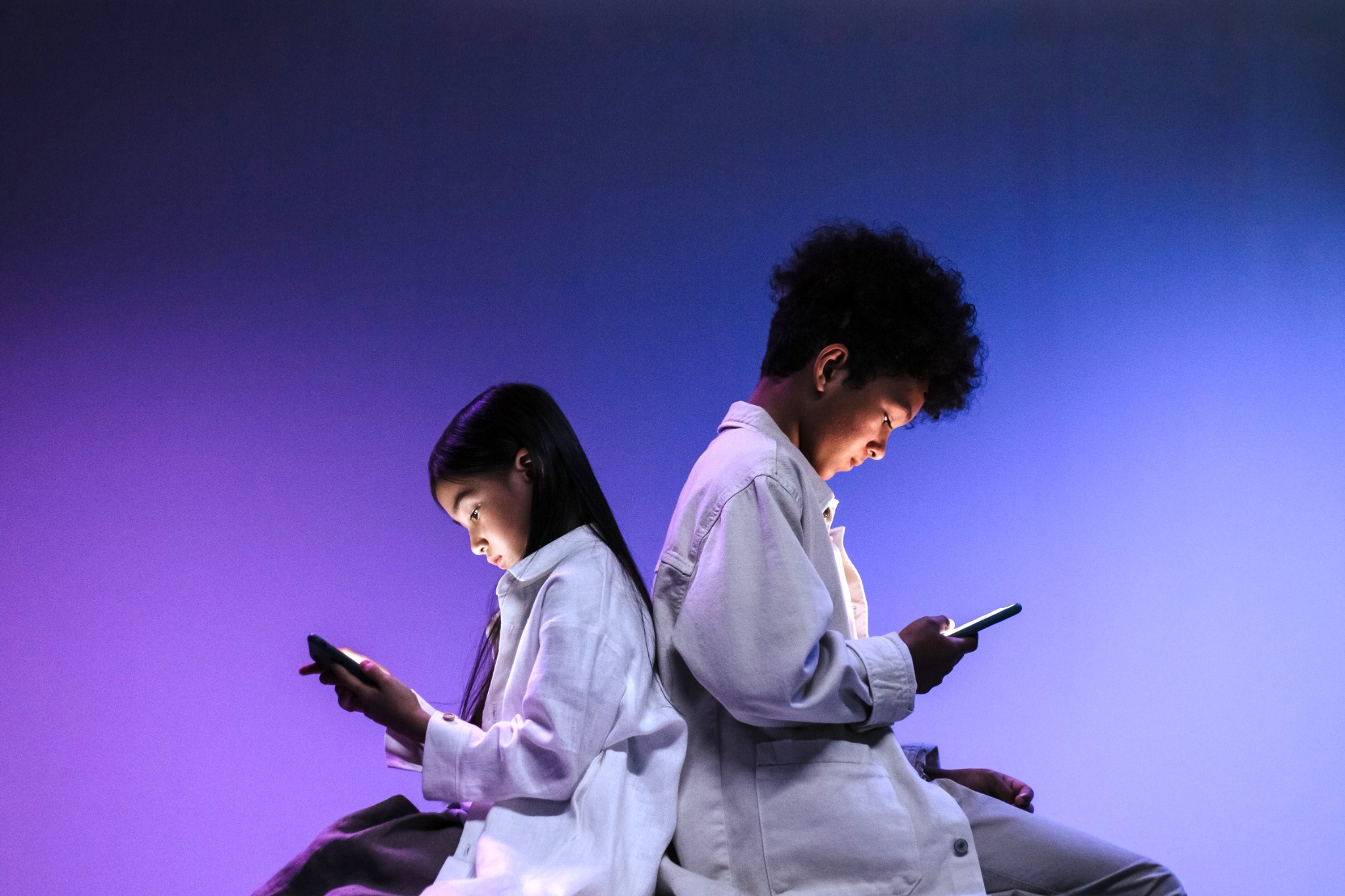
I wish to continue the legacy of an unadulterated evolving thought process with my teenager and his progeny. But will I be, is a question I fret to ask. The answer is vague and the reason behind the uncertainty is the digital chaos we live in. Platforms like YouTube, TikTok, Snapchat and many more, bombard our devices with video shorts of duration averaging between 10 to 40 seconds. Before we are able to completely process the content of the watched video and analyze it, the next video pops up leading to yet another. So, while we are fed with opinions of content creators, influencers, etc. there is no time to evaluate or cross check the barrage of information heaped in a tiny span. On an average, a viewer who watches 20-second clips can watch around 120 videos in an hour. Of course not all videos are watched until the end and thus the average. It’s like short circuiting the brain cells with overwhelming load causing mental exhaustion. Ironically, we call it entertainment.
In a nutshell, overexposure to short video clips can diminish decision making, impulse control, and emotional regulation. It conditions the brain to seek instant gratification, making real life work difficult; weakens working memory; and reduces core cognitive skills required for reading, studying and complex problem solving.
It is surprising how even after such mental exhaustion the brain craves for more. In order to keep the viewers glued to the screen, these shorts tend to offer something unique, entertaining, or eye-popping based on the user’s direct engagements, past behavior, personal traits, etc. Unlike the traditional media sources such as newspapers, and television that offered mixed content, the new age digital platforms are out to appease, enclose, and isolate a person in their own created bubble. The result is a mental space where no one belongs and a physical existence with isolated corners labelled as private spaces within the precincts of a home that once buzzed with real human discourse. Yet sometimes if the ear picks up bits of an ongoing conversation, the brain, high on the dose of digital craving commands the hands to reach out for a ‘noise cancellation’ headphone, lest the ‘noise’ might prod one to fathom and tolerate differing thoughts.
Recently, the tech giant, Meta reached a lawsuit settlement of 17 billion USD, initiated by 29 US states in 2023. The lawsuit accused the company of multiple violations of state and federal child privacy laws. The attorney generals of these states alleged that Meta intentionally designed its platforms to be addictive for young people in order to boost its business at the cost of harming the mental health of children and teens. Meta, officially denied the allegations but was quick to reach a settlement, promising stricter measures to limit its usage and subsequent addiction of its platforms like Instagram and Facebook. Arturo Béjar, an ex-Facebook employee and whistleblower is not convinced with the clarity of the promised measures. “The limitations that are in the agreement are the equivalent of saying: ‘Well, you can smoke as many cigarettes as you can in two hours a day. “It doesn’t make cigarettes any safer,” opined Béjar. By the time, each of these tech companies, busy in frequently floating newer social media platforms, are held accountable, we will have a generation raised by algorithms rather than families.
4 Comments Add a Comment?
Moiz
Sad state of affairs. Humans will learn it the hard way.
Zahra
Thanks Sana for writing about this. You are correct, the influence of social media is such that as parents we have lost control of what our children are learning. Sad truth!
Nadya
What a fantastic write-up, Sana—and one that I think all of us fellow parents can deeply relate to as we try to raise these digital-native kids. There’s something especially scary about navigating this as parents when we’re the first generation to really face it—we’re learning alongside our children, with no real playbook for what this will mean for their future, though we have some ideas. It’s unsettling to think about how easily deep thinking, curiosity, and thoughtful discussion can get lost as these tools and technological crutches become the norm, not just for our kids, but for us as well.
Farah Anjum
The problem of today's generation is that every person has the accessibility of becoming influencer. Every one can make 30 second video and can put it on any social media platform , now high level of intellect is not needed to be heard, every thing is being consumed some where. The thin line between sensibility and insensibility has been deminished.